http://www.bbc.co.uk/news/uk-england-london-20442024
Check out the BBC link...
More than 85% of Londoners use the internet - more than anywhere else in the country - but a BBC London poll shows very few use it as part of their social lives.
The BBC's technology correspondent Rory Cellan-Jones decided to go a day without the web to see if it would encourage him to connect more with people.
He says his morning newspaper feels "out of date" and 18 hours off-line made him feel "isolated" and "disoriented".
Friday, 23 November 2012

Wednesday, 14 November 2012
A2 media task 1b
A2 Media
Genre task
· Brainstorm different film genres
· Then categorise the sub and hybrid genres
· What are the conventions of a thriller?
· Generic codes and conventions used in your coursework
ž Iconography –e.g. Guns in gangster genre
ž Narrative-
ž Representations /characters
ž Setting
Metro to launch new website, Android app and Kindle Fire edition
Regional freesheet's 'mobile first' strategy will include major overhaul of Metro.co.uk
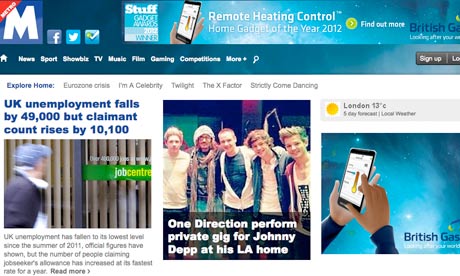
Metro's new website will debut on 5 December
Regional freesheet Metro is to launch a new multi-platform website, Android app and edition for Kindle Fire, as part of an aggressive "mobile first" strategy to move beyond its reliance on print distribution on the London Underground.
Daily Mail & General Trust-owned Metro, which publishes different editions in cities across the UK, is set to launch an Android app in the next few days – an Apple app was launched last year – with a major overhaul of Metro.co.uk and a Kindle Fire edition due before Christmas.
The new website will debut on 5 December and allow readers to "swipe" stories – to scroll through pages by flicking their fingers across their laptop, mobile or tablet screen – a forerunner to being able to create personalised editions.
Linda Grant, the managing director at Metro, said the newspaper was the "original mobile product" when it launched targeting London Underground commuters in 1999.
"It is as fit for purpose now as it was in 1999," Grant added. "Like all good visions it will always be a work in progress. Finally the platforms and devices are here to leverage beyond morning print."
Grant said Metro had "not seen a ripple" of impact from Time Out going free in London, and that Virgin Media launching Wi-Fi on the London Underground had also not made any difference to Metro readership.
Kenny Campbell, editor of Metro, said that as a strong, profitable print product it is imperative to make sure that the title does not miss the shift to digital consumption.
"Trying to arrest that movement would be like trying to build a dam and stop the tide going out," he said. "That is impossible. We don't need a dam at Metro, we need a boat. It is not about managing decline at Metro, it is a business we still see has an awful lot of potential to grow."
Kenny said Metro, which employs just over 80 editorial staff, is on for another record profit and revenue year – even if the impact of the London Olympics is stripped out – and that its parent company is committed to the title.
DMGT is in the process of offloading its regional newspaper business, Northcliffe Media, to focus on its Associated Newspapers national division, which publishes Metro along with the Daily Mail and Mail on Sunday.
"We are in an investment phase in Metro's life and DMGT are committed to it," Kenny said.
Metro re-signed its lucrative contract to distribute newspapers on the London Underground in 2010.
The deal runs for seven-and-a-half years and covers free distribution at 250 tube stations and 14 bus stations in London.
Metro was able to crack the London market by snapping up the first tube deal, which ran for 11 years, in 1999.
Thursday, 1 November 2012


Telegraph launches limited paywall for non UK users
New York Times-style metered system will charge non-UK users £1.99 a month to visit the site after 20 free page views

Telegraph website: will charge non-UK users £1.99 a month after 20 free page views
The Telegraph website has launched its long-awaited digital paywall with a metered system, charging non-UK users £1.99 a month to visit the site after 20 free page views.
Telegraph.co.uk is moving to a metered paywall model similar to the New York Times on Thursday after years of planning. The new payment system was introduced at 12.00 GMT according to an internal email seen by MediaGuardian.
The site will remain free for UK users, but overseas visitors will be asked to pay £1.99 for a month's access after viewing the site 20 times.
The move has been in the pipeline at Telegraph Media Group for more than two years. It has been hit by continued delays and has been hampered by the departure of several key executives.
TMG said that two-thirds of its online audience is based outside the UK. International markets, particularly the US, have become a major new battleground for British publishers including the Guardian and the Daily Mail in attempting to expand and generate revenue from online news.
A spokeswoman for the TMG said there were currently no plans to charge UK users to access the site.
The TMG executive editor of digital, Edward Roussel, said in a statement: "Telegraph writers include many of the world's finest journalists on areas such as politics, international affairs, sport and business.
"There is a growing global demand for first-class journalism. The Telegraph already has a strong subscriber base of loyal readers in the UK. Our subscription model is now being extended globally."
Telegraph.co.uk is the third-most popular national newspaper website in the UK, behind guardian.co.uk and Mail Online, according to Audit Bureau of Circulations figures.
The site had 2.7 million daily average browsers in October, a 34% boost on the previous year, and it has now topped 50 million browsers a month
Newspapers need to see themselves as brands!
Media and Online age -Newspaper Industry
Message to advertisers - farewell newspapers, hello newsbrands
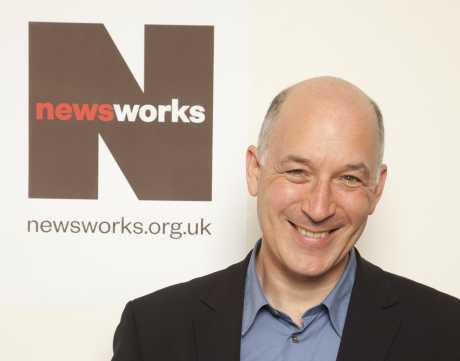
The Newspaper Marketing Agency, the body that seeks to raise awareness of the value of newspapers to advertisers and agencies, is being reborn as Newsworks.
The new name, removing the word "newspaper" from the title, is indicative of the changed landscape of the news industry.
It is part of the re-branding of the organisation led by its recently appointed chief executive Rufus Olins.
He sees the change as symbolic of the new reality among the national press groups, which now operate across a range of different platforms – computers, smartphones and tablets - as well as print.
Olins, who has a background in newspapers and magazines as a journalist, publisher and marketeer, believes newspaper titles now need to see themselves as brands. (this is the important bit!)
"We need to start thinking differently," he told me. "It's all about newsbrands, about delivering content through a range of platforms."
The transition from print to multi-platform journalism has been running apace for years, of course. But the key, as every publisher, editor and journalist knows, is to fund their work on screen as well as in print.
One huge advantage is the rise in the audience for news providers. Though print sales have declined, many more thousands of people have obtained online access.
Olins has produced impressive figures to back this up, arguing that "newsbrands" - I guess we will get used to it! - have increased their net daily audience by nearly 2m UK adults over the past five years and therefore reach more than 24m people.
Click for the full article -http://www.guardian.co.uk/media/greenslade/2012/may/21/national-newspapers-advertising
Evaluate your skills sheet
Answer the following questions to help evaluate the skills you have developed?
- What digital technology did you use?
- Creativity – creative decisions you made? Research into genre, mood boards, music, test shots, actors, location, scripting, mise-en-scene, camerawork, editing, lighting, costume, inspiration from other texts.
- Research and planning- How did you organise your research and planning? What research did you do? How did you present your research and planning? How did you get audience feedback? (Audience research, BBFC, textual analysis of other texts, questionnaires, genre research, storyboarding, scripting, props lists, locations, test shots, filming schedule, actors.)
- Post-production - identify all of the steps you took once you had filmed. Uploading, editing, effects, music, transitions, sound, narrative, rendering
- Using conventions from real media texts-What conventions of openings did you apply to your c/w. What film openings were you inspired by? Reference to specific films, directors, actors, suspense, camerawork, editing, narrative, mise-en-scene, lighting, music etc

More thoughts on section 1a

Section A is based on your coursework. You answer both questions 1(a) and 1(b).
Question 1(a) you must talk about both AS and A2 coursework products.
In this question you will be asked to discuss the progress of your skills from AS to A2 in relation to one or two of the following:
¤Research and Planning
¤Digital Technology
¤Post-Production
¤Creativity
¤Use of Conventions
Strong answers have a range of specific examples
- Weaker answers are descriptive
- Still use media terminology such as..... Connotation/denotation, codes and conventions - Link to key terms from theoretical areas (representation, audience, narrative, genre, cinematography, (non) / diegetic sound
- Evaluation and critical reflection on your work is needed.
- Your answer should have a sense of progression over your (A Level media journey)
Approaching Question 1a
Describe how you developed research and planning skills for media production and evaluate how these skills contributed to creative decision making. Refer to a range of examples in your answer to show how these skills developed over time.
Describe the ways in which your production work was informed by research into real media texts and how your ability to use such research for production developed over time.
Describe how you developed your skills in the use of digital technology for media production and evaluate how these skills contributed to your creative decision making. Refer to a range of examples in your answer to show how these skills developed over time.
You will notice that each of these begins by asking you to 'describe' and then goes on to ask you to reflect in some way: "evaluate", "how you used" "how your skills developed". herein lies the key to this part of the exam! You only have half an hour for the question and you really need to make the most of that time by quickly moving from description (so the reader knows what you did) to analysis/evaluation/reflection, so he/she starts to understand what you learnt from it.
There are five possible areas which can come up
Digital technology
Research and Planning
Conventions of Real Media
Post-Production
Creativity.
If you look through those questions above, you will see that they all contain at least two of the five- creativity is mentioned (as 'creative decision making') in two of them alongside the main area (digital technology on one, research and planning skills in the other). In the third of those past questions , research is combined with conventions of real media. So as you can see, the question is likely to mix and match the five, so you HAVE to be able to think on your feet and answer the question that is there.
So, how do you get started preparing and revising this stuff? I would suggest that you begin by setting out a list of answers to these questions:
What production activities have you done?
This should include both the main task and preliminary task from AS and the main and ancillaries at A2 plus any non-assessed activities you have done as practice, and additionally anything you have done outside the course which you might want to refer to, such as films made for other courses or skateboard videos made with your mates if you think you can make them relevant to your answer.
What digital technology have you used?
This should not be too hard- include hardware (cameras, phones for pictures/audio, computers and anything else you used) software (on your computer) and online programs, such as blogger, youtube etc
In what ways can the work you have done be described as creative?
This is a difficult question and one that does not have a correct answer as such, but ought to give you food for thought.
What different forms of research did you do?
Again you will need to include a variety of examples- institutional research (such as on how titles work in film openings), audience research (before you made your products and after you finished for feedback), research into conventions of media texts (layout, fonts, camera shots, soundtracks, everything!) and finally logistical research- recce shots of your locations, research into costume, actors, etc
What conventions of real media did you need to know about?
For this, it is worth making a list for each project you have worked on and categorising them by medium so that you don’t repeat yourself
What do you understand by ‘post-production’ in your work?
This one, I’ll answer for you- for the purpose of this exam, it is defined as everything after planning and shooting or live recording. In other words, the stage of your work where you manipulated your raw material on the computer, maybe using photoshop, a video editing program or desktop publishing.
For each of these lists, your next stage is to produce a set of examples- so that when you make the point in the exam, you can then back it up with a concrete example. You need to be able to talk about specific things you did in post-production and why they were significant, just as you need to do more than just say ‘I looked on youtube’ for conventions of real media, but actually name specific videos you looked at, what you gained from them and how they influenced your work.
This question will be very much about looking at your skills development over time, the process which brought about this progress, most if not all the projects you worked on from that list above, and about reflection on how how you as a media student have developed. Unusually, this is an exam which rewards you for talking about yourself and the work you have done!
Final tips: you need some practice- this is very hard to do without it! I’d have a crack at trying to write an essay on each of the areas, or at the very least doing a detailed plan with lots of examples. The fact that it is a 30 minute essay makes it very unusual, so you need to be able to tailor your writing to that length- a tough task!
How fast is your mobile Internet? -Media and online age research
UK's first 4G mobile service launched in 11 cities by EE

Related Stories
The UK's first major fourth generation (4G) mobile service has gone live in 11 cities.
Other mobile networks will not be able to offer 4G until next year.
Critics have questioned the service's affordability - particularly with regard to data usage allowance.
Belfast, Derby, Hull, Newcastle and Nottingham will be active by Christmas, the company said.
Network EE, formerly known as Everything, Everywhere and which owns Orange and T-Mobile in the UK, has promised speeds of between 8 to 12Mbps - up to five times faster than third generation mobile technology, known as 3G.
The extra speed and capacity allows for high-quality streaming of audio, video and other content while on the move.
The company said as well as giving customers faster internet, 4G would also be of big benefit to businesses.
All-you-can-eat world
However, such benefits come at a cost - the entry tariff of £36 per month includes 500MB of data, beyond which an add-on cost must be paid if the user wishes to carry on using the internet on their mobile.
So who is worth following for A level Media?
@julianmcdougall wrote the OCR textbook and he tends to use his tweets to send out useful links for the A2 exam in particular

@henryjenkins is the American academic who wrote 'Convergence Culture' and has done a lot of research on fans

@petesmediablog -Chief examiner for OCR Media

Guardian giving up print is false!
The telegraph wrote a story saying the Guardian was not going to print the newspaper anymore. However I found this article in the Guardian, the allegations are false!
Telegraph story about Guardian giving up print is false
When a story is published that is so obviously wholly inaccurate it is hard to know quite how to describe it. A mistake? A falsehood? A flyer?
About an hour ago, the Daily Telegraph posted a story on its website saying The Guardian is "seriously discussing" end to print edition.
But the truth is, the whole truth and nothing but the truth, is that The Guardian isn't about to do any such thing.
Of course, as with every paper in this transitory phase between print and screen, its executives are always doing their sums. At some point the economics may work out in favour of going digital only. At present, that just isn't the case.There has not been any discussion suggesting that The Guardian will cease publishing in print any time soon.
Nor do I give any credence to the other central claim in the Telegraph tale about there being a split over the issue between the editor-in-chief, Alan Rusbridger, and members of the paper's ultimate owner, the Scott Trust.
I understand that Rusbridger and the chief executive of the Guardian Media Group, Andrew Miller, are baffled by this story. There is not a scintilla of truth in the two major facts in an article noticeable for the absence of any named source and also for the fact that no questions were asked of Rusbridger or Miller.
In Fleet Street parlance, this could be deemed a flyer - a story you run up the flagpole hoping someone will salute. But no-one will be lifting an arm. It's just wrong. Plain wrong.
Subscribe to:
Posts (Atom)